
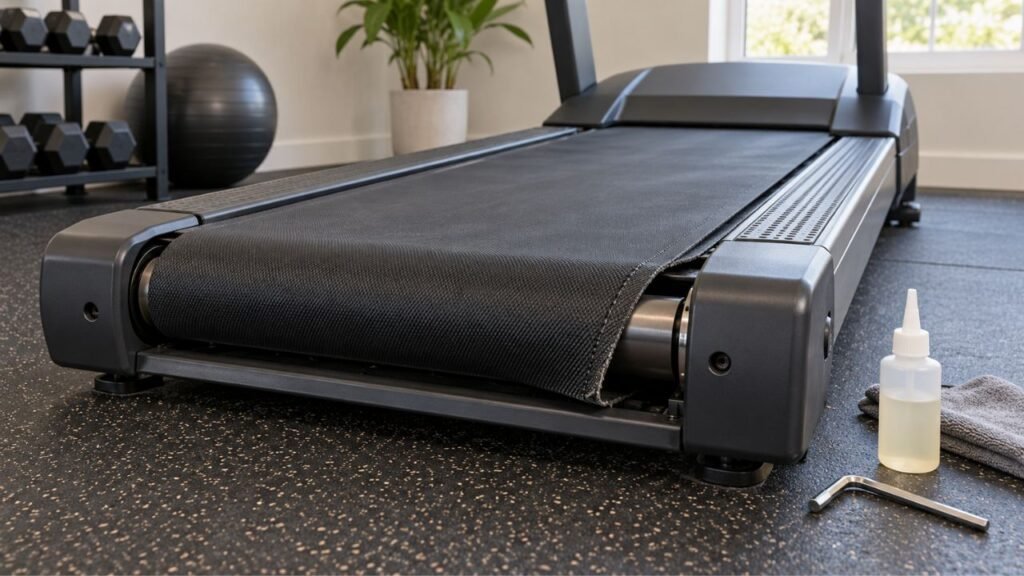
A treadmill belt usually slips because it is too loose, misaligned, poorly lubricated, or worn. Slipping can also come from the internal drive belt, rollers, deck, or motor system.
The important part is finding the actual cause before adjusting anything. I’ll walk you through each symptom, the safest fixes, and when you should stop troubleshooting yourself.
Key Takeaways
- A loose walking belt is one common cause of slipping.
- A dry deck can make the belt hesitate under your weight.
- Belt tension should be adjusted gradually, not aggressively.
- Overtightening can damage the motor, rollers, and bearings.
- Sideways belt movement usually points toward an alignment problem.
- Persistent slipping may come from the internal drive belt.
- Worn belts and decks sometimes require replacement instead of adjustment.
- Always follow your treadmill manufacturer’s maintenance instructions.
What Causes a Treadmill Belt to Slip?
A treadmill belt can appear to slip for several different reasons. Identifying the exact symptom helps you avoid unnecessary adjustments.
| What You Notice | Likely Cause | First Thing to Check | Possible Fix |
| Belt slips when your foot lands | Loose walking belt | Belt tension | Adjust rear roller bolts |
| Belt hesitates or feels sticky | Excessive deck friction | Lubrication | Lubricate if permitted |
| Belt moves toward one side | Alignment problem | Tracking | Recenter the belt |
| Belt slips at higher speeds | Drive system problem | Drive belt and rollers | Inspect or service |
| Belt stays loose after tightening | Stretched walking belt | Belt condition | Replace the belt |
| Motor slows under your weight | Friction or drive issue | Belt, deck, drive system | Troubleshoot further |
| Grinding or burning smell appears | Mechanical damage | Stop treadmill immediately | Call a technician |
| Breaker trips during operation | Electrical problem | Stop using treadmill | Professional service |
Before tightening anything, pay attention to exactly when the slipping happens. That small detail can point you toward the correct component.
Is the Walking Belt Actually Slipping?
Not every hesitation underneath your feet comes from a loose belt. Several treadmill problems can create a very similar feeling.
True Walking-Belt Slip
True slipping usually happens during a hard foot strike.
The belt briefly slides backward beneath your foot before catching again. You may notice it more while jogging than walking slowly.
A loose walking belt is often responsible for this symptom.
Belt Slowdown From Excessive Friction
Sometimes the belt is not technically slipping at all.
Instead, excessive friction develops between the belt and running deck. Your body weight increases resistance, causing the belt to briefly slow.
A dry deck, worn belt, or damaged deck can cause this.
Belt Tracking to One Side
A belt moving sideways is mainly an alignment issue.
It may eventually create uneven tension and contribute to slipping. However, simply tightening both sides may make the problem worse.
Tracking requires small alignment corrections rather than general tightening.
Drive-System Slip
Your treadmill also contains another belt inside the motor area.
This smaller drive belt transfers motor power to the front roller. If it slips, the walking belt may hesitate despite proper tension.
That is why repeated walking-belt tightening sometimes solves nothing.
Safety Checks Before Adjusting a Treadmill Belt
Most basic belt adjustments are manageable at home. However, treadmills contain powerful moving and electrical components.
Before making adjustments:
- Stop the treadmill completely.
- Remove the treadmill safety key.
- Unplug the machine from the wall outlet.
- Wait briefly before opening any covers.
- Keep fingers away from rollers and pulleys.
- Find your model number and owner’s manual.
- Check the manufacturer’s tension instructions first.
- Never perform live electrical testing yourself.
- Stop using the treadmill if slipping becomes severe.
Not every treadmill uses the same belt system.
Slat-belt treadmills, curved treadmills, walking pads, and commercial machines may require different maintenance. Some models also use self-lubricating systems that should not receive ordinary treadmill lubricant.
When your manual disagrees with generic advice, follow the manual.
How to Fix a Treadmill Belt That Keeps Slipping
Start with the simplest mechanical checks before opening the motor compartment. Most slipping problems become easier to identify using this order.
1. Check Whether the Walking Belt Is Too Loose
The walking belt naturally stretches after repeated use.
Once tension becomes too loose, the belt may lose its grip around the rollers. You often feel this immediately when your foot hits the belt.
Turn the treadmill off and unplug it first.
Lift the belt gently near the middle of the running deck. It should have some movement without feeling excessively loose.
However, avoid relying on one universal lift measurement.
Different treadmill manufacturers specify different tension levels. Your owner’s manual gives the safest target for your particular machine.
A loose belt may also:
- Hesitate during hard steps.
- Move normally without anyone standing on it.
- Feel unstable while jogging.
- Shift more than usual beneath your feet.
If those symptoms match yours, tension is worth checking first.
2. Tighten the Rear Roller Bolts Gradually
Most standard treadmills use two rear roller adjustment bolts.
These bolts control walking-belt tension and help with alignment.
Use the correct Allen wrench or adjustment tool. Make equal clockwise adjustments on both sides when increasing overall tension.
For many treadmills, a ¼-turn adjustment is a sensible starting point. However, follow your manufacturer’s instructions if they specify something different.
After each small adjustment:
- Test the treadmill at a slow speed.
- Walk normally for several moments.
- Notice whether slipping has improved.
- Stop before making another adjustment.
Avoid making several full turns at once.
Small adjustments give you much better control.
3. Make Sure the Belt Is Not Too Tight
More tension does not automatically mean better performance.
An excessively tight walking belt increases resistance throughout the drive system. That resistance makes the motor and rollers work harder.
Possible signs of overtightening include:
- The belt becomes difficult to lift.
- The motor sounds strained.
- Belt movement becomes unusually slow.
- Roller noises become more noticeable.
- The treadmill feels harder to move manually.
If slipping remains after reasonable tension adjustment, stop tightening it.
Another component is probably causing the problem.
4. Check the Deck for Proper Lubrication
The walking belt slides across the treadmill deck continuously.
Proper lubrication reduces friction between these two surfaces. When lubrication disappears, friction increases considerably under your body weight.
The belt can then hesitate, drag, or feel sticky.
Unplug the treadmill before checking beneath the belt.
Feel the deck near the belt’s center. A completely dry surface may indicate lubrication is needed.
However, confirm the recommended lubricant before applying anything.
Many standard treadmills use silicone-based treadmill lubricant. Others have different maintenance requirements or self-lubricating components.
Never assume every treadmill needs the same product.
5. Can Too Much Lubricant Make a Treadmill Belt Slip?
Yes, excessive lubricant can sometimes cause additional problems.
Too much lubricant may spread toward rollers or other traction surfaces. That can contribute to inconsistent movement on certain treadmill designs.
Excess lubricant also attracts dust and debris.
If slipping started immediately after lubrication, inspect how much was applied. Check your manual for the correct quantity and application location.
Do not keep adding lubricant whenever the belt slips.
First determine whether friction is actually the problem.
6. Check Whether the Belt Is Off-Center
Your treadmill belt should remain reasonably centered during operation.
If it continually moves left or right, roller alignment needs attention. Uneven flooring can also make tracking problems worse.
Before adjusting anything, confirm the treadmill sits level.
Run the treadmill slowly and watch the belt from behind. Notice which direction it consistently travels.
Tracking adjustments usually require very small changes to one rear bolt.
Allow several belt rotations after every adjustment.
Do not make rapid corrections because the belt needs time to respond.
7. Inspect the Walking Belt for Wear or Stretching
Treadmill belts do not last forever.
Heat, friction, body weight, and repeated movement gradually wear their surfaces. Eventually, tension adjustment cannot compensate for structural wear.
Look closely for:
- Frayed belt edges.
- Cracks or tears.
- Curling edges.
- Shiny or glazed areas.
- Uneven thickness.
- Permanent stretching.
- Rough or damaged sections.
- Heat or burn marks.
Also inspect the underside when possible.
A badly worn belt may continue slipping even after correct tensioning. In that situation, replacement usually makes more sense than further adjustment.
8. Inspect the Treadmill Deck for Wear
The running deck receives constant friction beneath the walking belt.
Eventually, the deck surface can develop rough areas or grooves. That creates resistance and can make the belt hesitate under load.
Look for:
- Grooves in the deck.
- Dark friction marks.
- Rough patches.
- Scoring.
- Excessive heat.
- Burning smells.
- Areas where lubrication disappears quickly.
A worn deck can also damage a new walking belt.
If the deck is severely damaged, replacing only the belt may not solve your problem.
9. Check the Internal Drive Belt
The drive belt and walking belt perform different jobs.
The walking belt is the large surface beneath your feet. The drive belt sits inside the motor compartment.
It connects the drive motor to the front roller.
A worn or loose drive belt can create several symptoms:
- Walking belt slips despite correct tension.
- Slipping becomes worse at higher speeds.
- Motor appears to run while the belt hesitates.
- Squealing comes from the motor compartment.
- Speed changes suddenly under body weight.
- Drive belt looks cracked or glazed.
Unplug the treadmill before removing any motor cover.
A visual inspection is usually reasonable for many home models. Major drive-belt tensioning or motor adjustments may require professional service.
10. Check the Front and Rear Rollers
Rollers guide the walking belt and maintain consistent movement.
The front roller receives power from the drive system. The rear roller maintains belt tension and helps control tracking.
Problems can develop from:
- Dirt buildup.
- Worn bearings.
- Loose pulley connections.
- Roller wobble.
- Damaged roller surfaces.
- Misalignment.
Listen carefully for grinding, clicking, or rumbling noises.
With the treadmill unplugged, rollers should move smoothly where accessible.
Rough bearings or loose pulleys usually require more than simple cleaning.
11. Make Sure the Treadmill Is Level
Treadmills perform best on a stable, level surface.
Uneven flooring can twist the frame slightly and affect tracking. Thick carpeting may also make some treadmills less stable.
Check:
- Front-to-back leveling.
- Side-to-side leveling.
- Adjustable leveling feet.
- Stability of the treadmill mat.
- Whether the floor flexes noticeably.
Correcting the surface may improve persistent alignment problems.
12. Check the User Weight Limit
Every treadmill has a maximum recommended user weight.
Operating near or above that limit increases stress on several components. The belt, deck, rollers, motor, and controller all work harder.
Extra load can reveal slipping that never appears while empty.
Check the rating listed in your owner’s manual or machine specifications.
If multiple people use the treadmill, consider the heaviest regular user.
13. Consider Motor or Motor-Control Problems
Electrical problems are less common than basic belt issues.
Still, they become possible once mechanical causes are ruled out.
Warning signs include:
- Sudden speed surges.
- Severe slowing under body weight.
- Motor humming or pulsing.
- Treadmill shutting down unexpectedly.
- Repeated breaker trips.
- Burning smells.
- Visible heat damage near electronics.
Stop troubleshooting if these symptoms appear.
Motor controllers contain dangerous electrical components even after normal operation. Electrical diagnosis should be handled by a qualified treadmill technician.
Why Does My Treadmill Belt Slip Only When I Step on It?
A treadmill can run perfectly while nobody stands on it. Your body weight changes the situation by increasing resistance dramatically.
When you step down, the motor must pull the belt beneath additional load. Any weakness in belt tension, lubrication, or the drive system becomes easier to notice.
Start by checking walking-belt tension.
Next, inspect belt-to-deck lubrication and overall belt condition. If those areas look correct, examine the drive belt and rollers.
Persistent slowing under weight can eventually point toward motor or controller issues.
Why Does My Treadmill Belt Still Slip After Tightening It?
If tightening did not solve the problem, do not keep tightening. Persistent slipping usually means something else needs attention.
Possible causes include:
- The walking belt is already tight enough.
- The deck lacks proper lubrication.
- Excessive lubricant reached traction surfaces.
- The walking belt is worn or stretched.
- The treadmill deck is damaged.
- The internal drive belt is slipping.
- The front roller pulley is loose.
- Roller bearings are worn.
- The motor cannot maintain torque.
- The motor controller has developed a problem.
Continuous tightening can create a second problem without fixing the first.
Return the belt to the manufacturer’s recommended tension before troubleshooting deeper components.
Why Does My Treadmill Belt Slip at Higher Speeds?
High-speed operation places greater demand on the treadmill’s drive system.
A minor problem that goes unnoticed during walking can become obvious while running. Higher speeds also increase heat, friction, and rotational forces.
Possible causes include a worn drive belt, loose walking belt, or damaged roller.
Excessive deck friction can also become more noticeable during faster workouts.
If the treadmill works well while walking but repeatedly slips while running, inspect the drive system before aggressively tightening the walking belt.
When Should You Replace the Treadmill Belt?
Adjustment cannot repair a belt that has suffered significant physical wear. Replacement becomes more reasonable when damage keeps returning after maintenance.
Consider replacing the walking belt when:
- The edges are badly frayed.
- Cracks appear across the belt.
- The underside becomes heavily glazed.
- The belt stretches beyond normal adjustment.
- The edges continually curl.
- Tracking problems keep returning.
- Heat damage becomes visible.
- Slipping continues with correct tension.
- Sections of the belt become noticeably thinner.
Check the running deck during belt replacement as well.
Installing a new belt on a badly worn deck can shorten its life.
When Should You Call a Treadmill Technician?
Basic tension, cleaning, and alignment checks are often reasonable DIY tasks. Internal electrical and major mechanical problems require more caution.
Call a qualified technician when:
- Slipping continues after correct belt adjustment.
- The drive belt requires complicated disassembly.
- Roller bearings grind or resist movement.
- The running deck has deep grooves.
- The treadmill produces a burning smell.
- The motor repeatedly loses power.
- Speed changes unpredictably.
- Circuit breakers keep tripping.
- Wiring appears burned or damaged.
- The motor-control board looks overheated.
- Manufacturer instructions prohibit user repairs.
You should also stop using the treadmill when slipping becomes unpredictable.
A sudden belt hesitation during running can easily cause a fall.
How to Prevent Your Treadmill Belt From Slipping Again
Regular maintenance helps the belt stay smooth and predictable. You do not need complicated maintenance after every workout.
Focus on these basics:
- Follow the manufacturer’s maintenance schedule.
- Check belt tension periodically.
- Keep the belt centered.
- Avoid overtightening rear roller bolts.
- Lubricate only when your model requires it.
- Use the correct lubricant type.
- Keep dust away from rollers.
- Vacuum around motor ventilation areas.
- Keep the treadmill level.
- Stay within the recommended weight capacity.
- Investigate unusual noises early.
- Address hesitation before it becomes severe.
A few minutes of preventive maintenance can prevent expensive component damage.
Final Words
A treadmill belt usually keeps slipping because tension, friction, or traction has changed somewhere in the system. Start with walking-belt tension and alignment before moving toward deeper mechanical causes.
Next, check lubrication, belt wear, deck condition, rollers, and the internal drive belt. This order helps prevent unnecessary adjustments and makes troubleshooting much easier.
Most importantly, never keep tightening a belt that refuses to improve. Persistent slipping can indicate worn components or electrical problems requiring professional service.
Related FAQs
Why Does My Treadmill Belt Slip When I Step on It?
Your weight increases resistance between the walking belt and treadmill deck. A loose belt, excessive friction, worn drive belt, or weakening drive system may then cause noticeable slipping.
How Tight Should a Treadmill Belt Be?
The belt should be tight enough to avoid slipping without creating excessive resistance. Because proper tension varies by treadmill design, use your manufacturer’s recommended adjustment procedure instead of relying on one universal measurement.
Can I Use a Treadmill If the Belt Is Slipping?
You should stop running on a treadmill with noticeable belt slipping. Sudden hesitation can disturb your stride, cause loss of balance, and potentially create additional mechanical damage.
Why Is My Treadmill Belt Still Slipping After I Tightened It?
The walking belt may not be the actual problem. A dry deck, worn belt, loose drive belt, damaged roller, worn deck, or motor problem can cause continued slipping.
Does a Treadmill Belt Need Lubrication?
Many standard treadmill belts require periodic deck lubrication, but not all models do. Follow your owner’s manual because self-lubricating and slat-belt treadmills may use completely different maintenance systems.
Can Too Much Lubricant Make a Treadmill Belt Slip?
Excess lubricant can sometimes reach areas where traction is required. It may also attract dust and debris, so always use the manufacturer’s recommended amount rather than applying additional lubricant unnecessarily.
Why Does My Treadmill Belt Slip at High Speed?
Higher speeds increase load, friction, and demand on the drive system. A loose walking belt, worn drive belt, damaged roller, or excessive deck friction may become noticeable only while running.
Why Does My Treadmill Belt Keep Moving to One Side?
Sideways movement usually happens because belt tracking is incorrect, the treadmill is uneven, or one side has different tension. Small rear-roller alignment adjustments usually correct minor tracking problems.
How Do I Know If My Treadmill Belt Is Worn Out?
Look for frayed edges, cracks, glazing, curling, uneven thickness, permanent stretching, or heat damage. Persistent slipping despite proper adjustment can also indicate that replacement is needed.
Can a Bad Drive Belt Cause a Treadmill to Slip?
Yes. The internal drive belt transfers motor power to the front roller. If it becomes loose, glazed, or worn, the walking belt may hesitate even when its tension is correct.
Can a Bad Motor Cause the Treadmill Belt to Slip?
A weakening motor or motor controller can cause speed loss under load. Suspect electrical problems after belt tension, lubrication, deck condition, rollers, and the drive belt have been checked.
Should I Replace the Treadmill Belt or the Whole Treadmill?
Replace only the belt when the rest of the treadmill remains healthy. Full replacement may make more sense when the deck, rollers, electronics, and drive components are also heavily worn.

Brent Wheeler writes for people who want to build practical, comfortable home gyms without making the process complicated. His guides and reviews focus on gym machines, equipment setup, usability, and choosing gear that fits everyday training needs.